
TAXATION
Furnished rental status: how does non-professional furnished letting work?
Eligibility conditions, choosing a tax regime, depreciating the property: what you need to understand before investing in furnished letting.
What is the non-professional furnished-rental status?
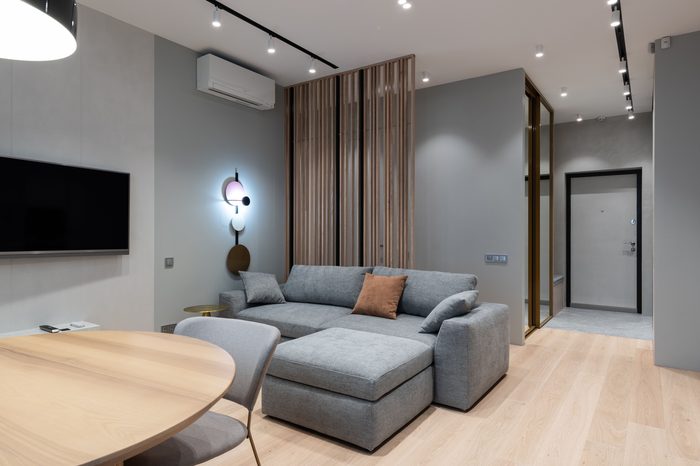
The non-professional furnished-rental status applies to anyone who lets a furnished property without this activity being their main professional occupation. It covers both a standard flat equipped to live in straight away, and a property within a serviced residence (student, business, senior or tourism residences).
To fall under the non-professional regime rather than the professional furnished-rental status, two conditions must be met: annual rental income must not exceed €23,000, or it must remain lower than the household's other earned income.
Good to know: a home is considered furnished when it includes all the equipment essential for normal occupation by the tenant (bedding, hobs, refrigerator, crockery, lighting, storage, etc.), as set out in a legally defined list.
Simplified or actual regime: which tax treatment should you choose?
Income from furnished letting falls under business income (BIC) rather than rental income from unfurnished property. Two tax regimes are possible:
Simplified regime (micro-BIC)
Applicable if annual income does not exceed the current threshold. A flat 50% allowance is applied to rent received, with no need to provide proof of expenses. Simple, but often less advantageous than a genuine deficit under the actual regime.
Actual regime
Allows you to deduct all actual expenses (loan interest, works, co-ownership charges, insurance) and, above all, to depreciate the property and furniture over several years, which greatly reduces, or even cancels out, tax on rent received.
Depreciation, the main advantage of the actual regime
Under the actual regime, the property, furniture and certain fittings can be depreciated over their estimated useful life. This depreciation is deducted from rent received, with no cash outflow, and often brings the taxable rental result close to zero for many years.
Why furnished-rental status works well on the French Riviera
- Strong demand for furnished rentals all year round: students, mobile professionals, and seasonal workers in tourism and events.
- Furnished rents that are generally higher than unfurnished ones, boosting rental yield.
- Good compatibility with holiday letting, depending on the wealth-building strategy chosen.
This article is for general information purposes only and does not constitute personalised tax advice. As every situation is specific, we recommend consulting an accountant or tax adviser to assess your project.
Have a furnished-letting project on the French Riviera?
Let's talk about your budget and goals: we'll help you identify properties suited to a furnished-rental strategy.
Start my project assessment




The 4 brands of Boulevard Group
- Cimiez Boulevard: real estate sales specialised in Cimiez, Rimiez and Gairaut in Nice
- Riviera Boulevard: premium real estate sales, from Menton to Saint-Tropez
- Estate Boulevard: rental management and residential and holiday letting
- Asset Boulevard: rental investment and new-build property